










Introduction
Cold chain logistics from Morocco is what turns the country’s proximity advantage into an actual competitive edge for agri-food exporters - or erases it entirely, if temperature control fails somewhere between the greenhouse and the European distribution center.
With Morocco’s fruit and vegetable exports hitting record volumes and the EU absorbing the large majority of that trade, cold chain reliability has become as commercially important as the produce itself.
Morocco’s Agri-Food Export Scale, by the Numbers
Morocco’s agri-food export sector has grown substantially over the past decade. Fruit and vegetable exports climbed from approximately 1.4 million tons in 2023 to nearly 1.6 million tons in 2025 - a roughly 15% increase despite challenging climate conditions.
Tomatoes remain the backbone of that trade: exports to the EU reached 568,370 tons in the 2024/2025 campaign, representing 19.63% of total EU tomato imports and generating €1.04 billion in export value.
Citrus, berries, and avocados round out a growing high-value export portfolio, with the EU - led by France, Spain, Germany, and the Netherlands - absorbing over 70% of total Moroccan agricultural exports.
Why Cold Chain Integrity Is Non-Negotiable
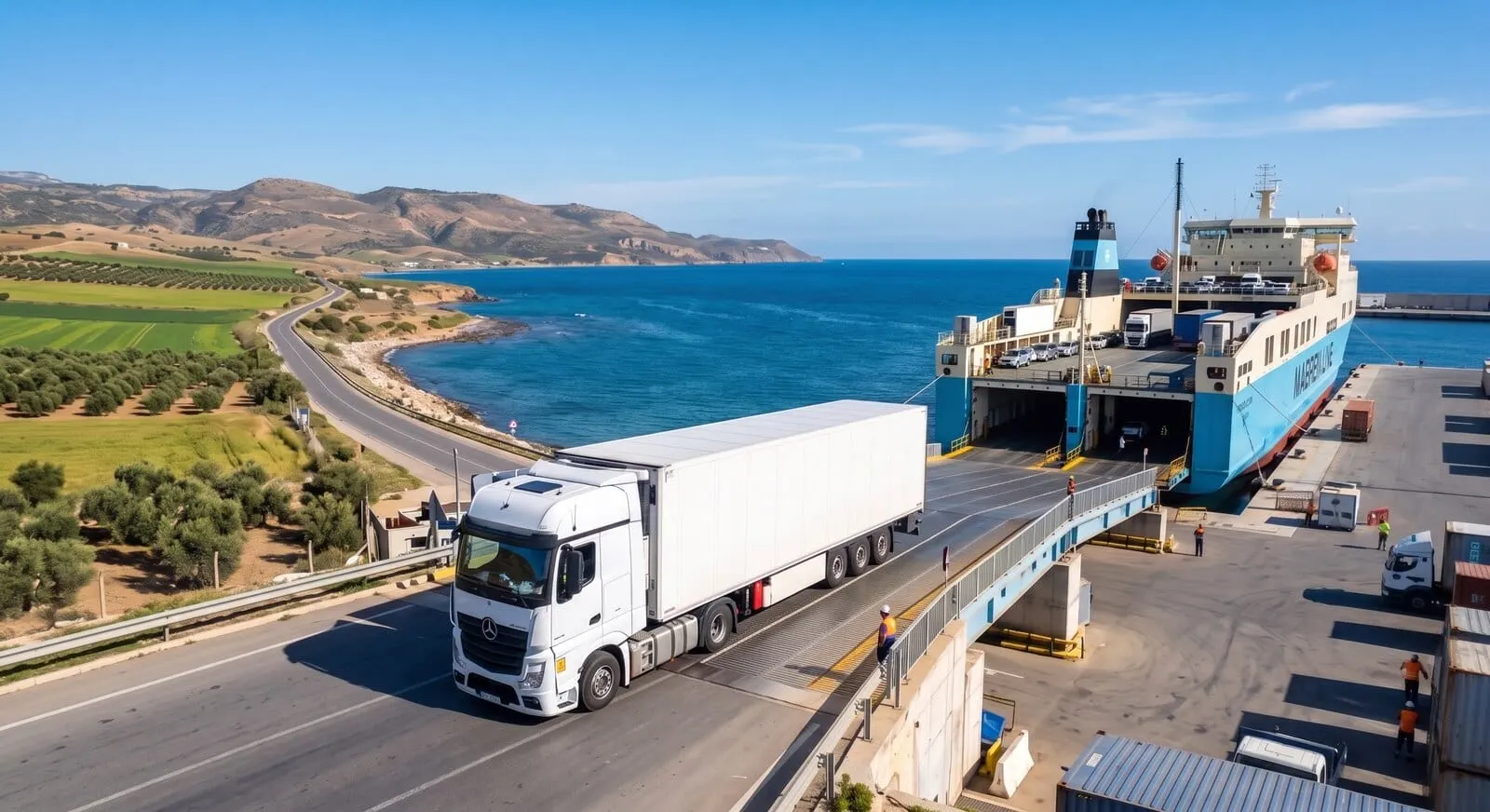
Morocco’s core structural advantage in agri-food exports is speed: at 14 kilometers from Spain across the Strait of Gibraltar, fresh produce can reach European supermarkets within 48 hours of harvest.
That advantage is entirely dependent on unbroken cold chain integrity. A single refrigeration failure or documentation delay at any point in the route does not just risk one shipment; it undermines the entire premise of speed-to-market that makes Moroccan produce competitive against origins further from Europe.
Where the Cold Chain Actually Breaks
Cold chain risk in Moroccan agri-food exports concentrates at a handful of predictable points:
| Risk Point | What Goes Wrong | Why It Matters |
|---|---|---|
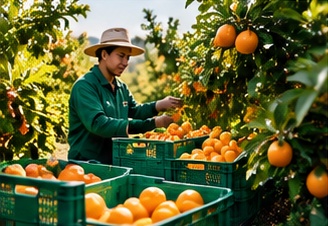
| Farm-to-packhouse handling | Delays between harvest and initial cooling | Shelf life erodes before the formal cold chain even begins |
| Packhouse-to-port transit | Road transport from growing regions like Souss-Massa and Gharb without continuous refrigeration | Insulated transport is not enough for temperature-sensitive produce |
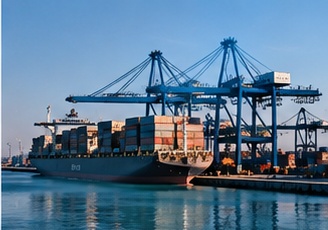
| Port handling and vessel loading | Transfer points between road transport and maritime or short-sea shipping | Temperature monitoring gaps are most likely to go unnoticed here |
| EU border inspection | Documentation gaps or conformity certificate issues | Perishable cargo can be held long enough to lose quality even if the physical cold chain held |
Regulatory Requirements Exporters Need to Plan Around
Morocco implemented a regulation in 2023 mandating that all cold storage facilities adhere to strict temperature control protocols and undergo regular inspections - a meaningful increase in the compliance bar for the sector.
On the receiving end, EU-bound shipments require the standard documentation described in our Morocco shipping FAQ, plus cargo-specific phytosanitary certificates and, in many cases, temperature logs demonstrating continuous cold chain compliance throughout transit.
For the general customs and documentation requirements that apply on top of these cold-chain-specific rules, see Shipping To and From Morocco: Frequently Asked Questions for International Supply Chain Managers.
Cold Chain as a Margin Lever
Logistics expenses account for approximately 30% of total export costs in Morocco’s cold chain and horticulture sector, driven significantly by fuel price fluctuations and the higher operating costs of refrigerated transport and storage.
That makes cold chain efficiency a direct lever on export margins, not purely a defensive measure against spoilage. Exporters who manage this well are competing on cost as much as on quality.
What Real-Time Monitoring Changes
The same principle that applies to reefer risk globally applies with particular force to Morocco’s high-volume, time-sensitive produce trade: a temperature deviation caught in transit is a recoverable problem; one discovered at the EU border or on retail shelves is a total loss.
For the broader data on what temperature excursions cost when they are not caught early, see The Cost of a Missed Alert: Real-World Scenarios Where Risk Intelligence Saved (or Could Have Saved) a Shipment.
See Your Cold Chain Risk Points Mapped
Every growing region and export route has different risk concentration points. Request a cold chain risk assessment for your specific product and route from farm to European port, and we will identify where monitoring would catch problems earliest.
Conclusion
Morocco’s agri-food export growth - record volumes, a dominant EU tomato market share, and a fast-expanding berry and avocado sector - is built on a proximity advantage that only holds if the cold chain does.
With logistics costs already representing roughly 30% of export costs and stricter 2023 regulations raising the compliance bar, cold chain reliability has become as central to competitiveness as growing conditions themselves.
Related reading: Shipping To and From Morocco: Frequently Asked Questions · The Cost of a Missed Alert
Frequently asked questions
How much of Morocco's agricultural exports go to the EU?
More than 70% of Morocco's agricultural exports go to the EU, with France, Spain, Germany, and the Netherlands as the top importing markets.
How fast can Moroccan produce reach European markets?
Fresh produce can reach European supermarkets within 48 hours of harvest, given Morocco's 14-kilometer proximity to Spain across the Strait of Gibraltar - provided the cold chain remains unbroken throughout transit.
What regulation governs cold storage in Morocco?
A 2023 Moroccan government regulation mandates strict temperature control protocols and regular inspections for all cold storage facilities handling export produce.
Where does the cold chain most commonly break down for Moroccan exports?
The highest-risk points are farm-to-packhouse handling delays, packhouse-to-port road transit, port handling and vessel loading transfers, and EU border documentation holds.
How much do logistics costs represent in Morocco's cold chain export sector?
Logistics expenses account for approximately 30% of total export costs in Morocco's cold chain and horticulture sector, making efficiency a direct margin factor rather than just a quality-protection measure.
References
- North Africa Post, Morocco's Fruit and Vegetable Exports Hit Record Volumes Despite Price Normalization.
- Morocco World News, Morocco's Tomato Exports to the EU Jump 40% in Ten Years.
- Ken Research, Morocco Cold Chain and Horticulture Exports Market, 2019-2030.
- European Commission, EU-Morocco Association Agreement.