











Introduction
Moroccan logistics, seen from the exporter’s desk, is a different problem from the one described in market reports. You are not managing a USD 13 billion sector — you are managing a single reefer truck from your packhouse in Ait Melloul to a distribution centre outside Lyon, and you need to know its GPS position at 11pm, whether the temperature is holding at 4 degrees C, and whether the CMR is pre-lodged with customs so the driver doesn’t wait three hours at the Spanish border at 6am.
This guide is written from that perspective. It covers the five operational decisions that determine whether a Moroccan export shipment arrives on time, in compliance, and at a cost that keeps the business competitive: choosing the right transport mode and corridor, managing customs and documentation correctly, running a cold chain that satisfies EU buyer requirements, selecting and monitoring carriers, and using digital tools to turn reactive crisis management into proactive supply chain control. Every claim is sourced.
1. Morocco’s Export Corridors: Which Route for Which Cargo
The single most impactful decision in a Moroccan export operation is matching your cargo to the right corridor and modal combination. The wrong choice adds cost, transit time, and compliance risk simultaneously.
Road — Morocco to Spain/EU (Dominant)
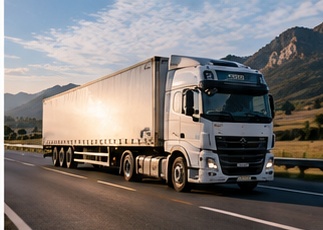
Handles the majority of fresh produce, automotive parts, and FMCG exports. Via Tanger Med ferry crossing (1.5 hrs) then road through Spain and France. Transit times: Agadir–Madrid approx. 22 hrs | Agadir–Paris approx. 36 hrs | Agadir–Rotterdam approx. 48 hrs.
Maritime — Containerised (High Volume)
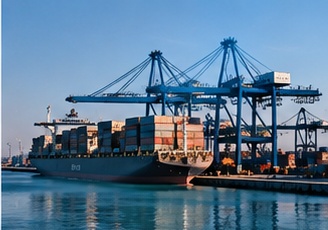
Optimal for non-time-sensitive cargo, bulk goods, and reefer containers to northern Europe. Tanger Med serves 180 ports in 70 countries with calls from Maersk, MSC, CMA CGM, Hapag-Lloyd. Transit: Tanger Med–Rotterdam approx. 4 days | Tanger Med–Algeciras approx. 2 hrs. [1]
Cold Chain — Souss-Massa Exports (Critical)
Fresh produce from Souss-Massa region — citrus, tomatoes, strawberries, peppers — requires unbroken refrigeration from packhouse to EU distribution centre. ONSSA phytosanitary certificate mandatory. Temperature: 4–8 degrees C for citrus | 1–4 degrees C for strawberries | 8–10 degrees C for tomatoes.
Air Freight — Agadir / Casablanca (Premium)
For high-value perishables, aerospace components, and pharmaceutical cargo where speed outweighs cost. Mohamed V (CMN) and Al Massira (AGA) handle the majority of cargo movements. Transit: Agadir–Paris CDG approx. 3.5 hrs flight plus customs clearance.
Port selection: Tanger Med vs. Agadir vs. Casablanca
Tanger Med (10,241,392 TEUs in 2024 — ranked 17th globally [1]) is optimal for containerised exports to northern and central Europe, automotive RoRo, and multimodal connections. Its USD 500 million truck terminal expansion will double truck capacity to one million vehicles per year. [2]
Agadir Port is the strategic choice for Souss-Massa fresh produce exporters, with direct reefer container services to Rotterdam, Antwerp, and Nantes. Routing through Tanger Med instead adds 700+ km of reefer truck transit — increasing cost, time, and cold chain risk. Casablanca remains Morocco’s primary hub for bulk commodities, phosphate derivatives, and West African trade.
2. Moroccan Export Customs: Documentation That Determines Whether Your Truck Crosses the Border
Customs documentation is where most preventable delays originate in Moroccan export logistics. A driver arriving at Beni Enzar or Fnideq with incomplete, mismatched, or unsigned paperwork faces a queue that does not move until the documentation problem is resolved. For a reefer truck carrying strawberries at 2 degrees C, four hours at a border checkpoint is not an inconvenience: it is a spoilage event.
The mandatory export documentation checklist
PortNet: Morocco’s digital customs gateway
PortNet is Morocco’s national single-window system, integrating customs declarations (ADII), phytosanitary certificates (ONSSA), port authority clearance, and payment of port dues into a single digital submission. [7] Exporters whose logistics platforms pre-populate PortNet from existing shipment data eliminate the duplicate data entry that causes discrepancies. A shipment whose data flows from the ERP through the logistics platform to PortNet automatically has consistent lot numbers, weights, and package counts across every document.
“The biggest delays occur at precisely the points where real-time data exchange between operators can have the greatest impact on efficiency — seaports, airports, and multimodal transfer facilities.”
— World Bank, Connecting to Compete: Logistics Performance Index 2023
3. Cold Chain Logistics from Morocco: The Compliance Architecture EU Buyers Require
Morocco exported approximately 1.7 million tonnes of fresh fruits and vegetables in the 2023–24 season — the majority destined for EU markets. [6] Every tonne moved under a cold chain requirement. EU Regulation 2017/625 on official controls places the compliance burden on the exporter: it is your responsibility to demonstrate that the cold chain was maintained continuously, not the buyer’s responsibility to assume it was. [8]
The five cold chain control points — where failures happen
| # | Control point | Operational reality |
|---|---|---|
| 1 | Pre-cooling at packhouse | Produce must reach target temperature before loading. Forcing cold on a warm load in the reefer truck takes hours the transit schedule doesn't allow. The reefer unit maintains temperature; it does not create it. Risk: loading warm produce that appears compliant at departure but rises during transit. |
| 2 | Packhouse to port — road transit (Agadir or Tanger Med) | The highest-risk leg. Driver behaviour — opening doors at fuel stops, reefer unit set-point errors, mechanical failures — causes the majority of temperature excursions. Without a real-time sensor alert, the shipper discovers the problem at the port or when the EU buyer reports a non-conformity. Risk window: 4–18 hours unmonitored transit. |
| 3 | Port dwell — cold storage or waiting on dock | If the vessel call is delayed, cargo may dwell at the port for 6–24 hours. Port cold stores at Agadir and Tanger Med are available but require pre-booking. Cargo left on dock without cold storage is a compliance failure under EU food hygiene rules. Risk: unexpected vessel delays creating unplanned warm dwell. |
| 4 | Maritime transit in reefer container | Modern reefer containers maintain temperature reliably with remote monitoring by the shipping line. Request a copy of the container's temperature log at destination — most shipping lines provide this digitally. It serves as your cold chain proof for EU buyer disputes. |
| 5 | EU border inspection point (BIP/DSCE) | At the EU border, phytosanitary inspectors verify the physical load against the ONSSA certificate. A documentary discrepancy triggers physical inspection. An actual temperature excursion — visible as wilting or colour change — triggers rejection and return. A rejected load at Rotterdam or Algeciras is a total loss for the Moroccan exporter. [8] |
4. What Moroccan Export Logistics Actually Costs: A Transparent Breakdown
Morocco’s logistics costs represent approximately 20% of GDP — compared to 10–11% in France and 8% in Germany. [10] For exporters, this gap manifests as higher transport costs per tonne, more expensive border delays, and greater administrative overhead than European competitors face on equivalent supply chains. The following breakdown gives operational cost ranges based on 2026 market conditions.
| Cost Category | Typical Range (2026) | Key Variable |
|---|---|---|
| Road freight — reefer Agadir to Casablanca (full truck, 24 tonnes) | MAD 4,500 – 7,500 | Diesel price; return load availability |
| Road freight — reefer Agadir to Tanger Med (full truck, 24 tonnes) | MAD 7,000 – 11,000 | Truck availability; seasonal peaks (citrus Oct–Mar) |
| Tanger Med to Europe (reefer container, 40ft) Ocean freight + THC, excluding inland | EUR 800 – 2,400 | Destination port; carrier; season |
| Customs brokerage Per export declaration, agri-food | MAD 800 – 2,500 | Complexity; number of tariff lines |
| ONSSA phytosanitary certificate Per shipment | MAD 300 – 700 | Product category; inspection complexity |
| Port terminal handling charges (THC) Tanger Med, per 40ft container | EUR 180 – 320 | Carrier contract; peak season surcharges |
| Broker margin (spot road freight) If carrier sourced through intermediary | 8 – 22% on rate | Relationship; urgency; number of broker tiers |
| Incident costs (spoilage, penalties, fines) Average without real-time monitoring | 2–4% of annual turnover | Cold chain integrity; border delay frequency |
5. Selecting and Managing Carriers in Morocco: What the Data Reveals
Morocco’s road freight carrier base is overwhelmingly composed of small operators — fleets of 1 to 10 trucks, often owner-operated, frequently without telematics or temperature monitoring equipment. This is not a criticism: it is a structural reality that shapes how carrier management must work in the Moroccan market, and it explains why broker networks have historically dominated spot freight procurement.
The four questions every Moroccan exporter should ask a carrier
Why carrier performance data does not exist in Morocco — yet
In European markets, logistics platforms accumulate years of carrier performance data — on-time delivery rates, temperature compliance records, damage frequency — and present it to shippers at the point of carrier selection. In Morocco’s traditional market, this data does not exist in accessible form. Shippers rely on operational memory, word-of-mouth reputation, and the broker’s assurance. The broker’s incentive is to fill the load, not to match the shipper with the most reliable carrier.
Digital platforms like FreshTrack that record and surface carrier performance data — on Morocco’s specific lanes, with Moroccan carriers — transform this from a relationship-dependent guess into a data-driven selection. FreshTrack builds verified on-time performance and temperature compliance records for every carrier in its network, making this data available to shippers at the point of booking.
6. Digital Tools That Change Moroccan Logistics Operations in Practice
Digital logistics tools in Morocco are not a future investment — they are solving problems that exist today, on every shipment that leaves without GPS visibility, with paper CMR that arrives after the truck, and with temperature records that exist only as a driver’s verbal report.
Real-time GPS tracking with cold chain integration
FreshTrack is a collaborative Moroccan logistics and digital platform focused on supply chain visibility and risk management, connecting all actors of the logistics ecosystem through a single interface. FreshTrack is a collaborative supply chain visibility and risk management platform connecting all actors of the logistics ecosystem on a single interface — enabling real-time GPS tracking across road, maritime, and air transport modes, instant capacity matching between load owners and carriers, digital documentation, and analytics dashboards that give logistics managers a complete view of their freight portfolio. FreshTrack (freshtrack.ma) provides continuous GPS tracking across road and maritime legs, with IoT cold chain sensor integration that pushes automated alerts when temperature deviates from the set range — before the excursion becomes irreversible. The platform covers the full journey from packhouse dispatch to port gate, with live location visible from any device. For a logistics manager monitoring 30 reefer trucks simultaneously during peak citrus season, the alternative is 30 phone calls every four hours.
Digital load matching: reducing the broker layer
FreshTrack’s load-matching engine connects shippers with available carriers in real time. A Casablanca importer receiving a container from Tanger Med can post the onward domestic delivery requirement and receive competitive carrier responses within minutes — without an intermediary broker adding 10–20% to the rate. Digital freight marketplaces in European markets have demonstrated 8–15% rate reductions and 60–70% reductions in empty running on digitised lanes. [11] Morocco’s high-volume domestic corridors — Agadir–Casablanca, Casablanca–Tangier — have the density to support equivalent results.
Digital CMR and documentation management
The e-CMR Protocol — the additional protocol to the CMR Convention giving electronic consignment notes full legal standing — has been ratified by Spain and France, Morocco’s primary road freight partners. [3] A digital platform that generates e-CMR compliant with the Protocol allows documentation to be pre-lodged with border authorities before the truck arrives — reducing customs examination from hours to minutes. All documentation is archived against the shipment record, creating an auditable trail for EU buyer compliance queries and insurance claims.
PortNet integration: the customs acceleration
A logistics platform that integrates with PortNet submits customs data from the shipment record automatically — eliminating the re-keying that creates discrepancies between the CMR, ONSSA certificate, and customs declaration. The result is a consistent, cross-validated documentation set that moves through the system without generating exceptions. [7]
7. Morocco’s Seasonal Logistics Calendar: When Capacity Tightens
Moroccan logistics has pronounced seasonal patterns driven by the agricultural export calendar. Shippers who do not plan around these peaks pay elevated spot rates, accept lower-quality carrier availability, and queue for port bookings that should have been made weeks earlier.
Structured to address Google’s ‘People Also Ask’ queries and AI Mode search. Every answer sourced.
Real-Time Risk Monitoring: How FreshTrack Prevents Costs Before They Materialise
Every shipment that leaves without live monitoring carries a hidden cost line: the gap between when a problem starts and when anyone notices. For Moroccan exporters operating on thin margins against tightly specified EU buyer requirements, late detection is the single most expensive operational failure. FreshTrack monitors every risk variable in your active shipments in real time and sends targeted alerts the moment a threshold is breached — so your team can act while there is still time to act.
Temperature Breach Alert
Cold chain integrity is monitored continuously across every road, maritime, and air leg. When a reefer truck or container exceeds your defined temperature band — whether at 2°C for strawberries or 8°C for citrus — an alert fires immediately to your logistics team. Not at the port. Not when the EU inspector opens the container. At the moment the excursion begins, while there is still a window to intervene, redirect, or notify your buyer before a claim is filed.
Demurrage and Detention Risk
Container free time disappears faster than most shipper teams realise, and the invoice arrives weeks after the damage is done. FreshTrack tracks free-time usage across every container in your maritime portfolio, sending automatic alerts 48 and 24 hours before expiry. For Moroccan exporters moving reefer containers through Tanger Med or Agadir Port during peak citrus season, this alone can prevent hundreds of euros in avoidable demurrage per shipment.
ETA and ETD Deviation Notification
Carriers change schedules. Vessels skip calls. Ferry departures slip. What rarely happens is that someone calls your logistics team to tell them in time. FreshTrack automatically detects ETA and ETD revisions across all transport modes and notifies the right contacts immediately — enabling you to reach your EU buyer before they discover the late arrival themselves, rebook downstream transport, and contain the cost of the disruption before it compounds.
Missing Container Alert
When a container stops reporting position or fails to appear at its expected port milestone, FreshTrack raises an automatic missing-status alert. The platform cross-references AIS shipping data and terminal feeds to verify the flag before it reaches your team — so you are not chasing false positives. For a Moroccan exporter whose container has genuinely gone dark on a multi-leg journey, this is the difference between finding the problem in hours and discovering it when the buyer asks where the order is.
© 2026 FreshTrack · freshtrack.ma/en · This document is intended for informational purposes. All statistics cited are traceable to primary sources as verified in May 2026.
Frequently asked questions
How long does it take to ship from Morocco to Europe?
Road freight from Tanger Med to Madrid: approximately 22–28 hours; to Paris: 36–48 hours; to Rotterdam: 48–60 hours, including Strait of Gibraltar ferry crossing. [1] Maritime from Tanger Med to Algeciras: approximately 2 hours; to Rotterdam: 4–5 days (direct services). The main variable is not transit time but customs clearance — a correctly prepared shipment with digital CMR and pre-lodged PortNet declarations clears in hours; a paper-dependent shipment can wait 4–12 hours at the border.
What documents are required to export from Morocco by road?
Core road export documentation: (1) CMR consignment note — legally required, must be complete [3]; (2) commercial invoice and packing list; (3) Form EUR.1 — certificate of origin for EU preferential tariff [4]; (4) ONSSA phytosanitary certificate for fresh produce [5]; (5) EACCE export certificate for agri-food [6]; (6) customs export declaration (DAE) through ADII's BADR system; (7) T1 transit document if cargo passes through Spain/France in bond. Digital platforms that pre-populate and lodge documents through PortNet eliminate the discrepancies that cause border delays.
What is the cheapest way to ship goods from Morocco to France?
For freight above one pallet, road transport via Tanger Med is typically the lowest cost-per-tonne option for Morocco–France, with 36–48 hours door-to-door. LCL maritime is competitive for non-urgent ambient cargo. Air freight is 5–10x more expensive per kilogram. The cost reduction with the fastest payback is eliminating broker intermediaries via digital load-matching — which compresses spot road rates by 8–15% and removes layers adding 10–20% to broker-sourced freight. [11]
How does cold chain logistics work in Morocco for agri-food exports?
Cold chain for Moroccan agri-food exports covers five stages: (1) pre-cooling at packhouse to target temperature; (2) reefer truck transit to port (Agadir or Tanger Med); (3) port cold storage if vessel dwell is required; (4) reefer container maritime transit; (5) EU border inspection at a Border Inspection Post. [8] The critical control point is the road transit leg — unmonitored temperature excursions during the packhouse-to-port journey cause the majority of EU rejection events. Real-time IoT temperature monitoring with automated alerts is the intervention that catches excursions before they become border rejections.
What are the main logistics costs for Moroccan exporters?
Five cost categories: (1) primary road transport — MAD 4,500–11,000 per full reefer truck depending on route and season; (2) maritime freight — EUR 800–2,400 per reefer container to EU ports; (3) customs brokerage — MAD 800–2,500 per export declaration; (4) documentation fees — ONSSA certificates, EACCE authorisations; (5) incident costs — estimated at 2–4% of annual turnover for exporters without real-time monitoring. [12] Morocco's total logistics costs represent approximately 20% of GDP vs. France's 10–11% [10], meaning digital gains have outsized competitive impact.
How do Moroccan customs work for road freight to Europe?
Moroccan customs for road freight exports is administered by the ADII. Export declarations are submitted electronically through the BADR system before departure. At physical crossing points (Beni Enzar, Fnideq/Sebta), officers verify the load against the electronic declaration. PortNet integrates ADII customs, ONSSA certificates, and port authority clearance into a single digital submission. [7] Logistics platforms that pre-populate PortNet from existing shipment data eliminate duplicate data entry and reduce customs dwell time from hours to minutes.
Which port is best for exporting from Morocco — Tanger Med or Casablanca?
The choice depends on cargo type, origin, and destination. Tanger Med (10.24 million TEUs in 2024, ranked 17th globally [1]) is best for containerised exports to northern Europe, automotive RoRo, and road crossings to Spain. Agadir Port is optimal for Souss-Massa fresh produce exporters — proximity saves 700 km of inland reefer transit compared to Tanger Med routing. Casablanca is the primary hub for bulk cargo, phosphate derivatives, and West African trade routes. FreshTrack allows shippers to compare vessel schedules across all three ports in real time from a single interface.
References
Every statistic in this article is traceable to a primary or authoritative secondary source.
- Tanger Med Port Authority. Container Activity — Official Statistics 2024. 10,241,392 TEUs (+18.8% YoY); 516,000 trucks (+8.1%).
- Morocco World News. Tanger Med Port Launches $500 Million Expansion of Truck Terminal. July 2025.
- UNECE. eCMR — Additional Protocol to the Convention on the Contract for the International Carriage of Goods by Road.
- European Commission — DG Trade. EU-Morocco Association Agreement — Rules of Origin and EUR.1 certificates.
- ONSSA. Phytosanitary certification requirements for Moroccan agricultural export.
- EACCE. Export authorisations and agri-food export statistics for Morocco.
- PortNet S.A. Morocco's national single-window for port, customs, and logistics administration.
- European Union. Regulation (EU) 2017/625 on official controls — Border Inspection Post procedures.
- GLOBALG.A.P. Certification requirements for agricultural producers and packhouses supplying EU retail.
- Rantasila & Ojala. Measurement of National-Level Logistics Costs and Performance. OECD/ITF Discussion Paper 2012-4.
- Transporeon. Digital freight marketplace operational data: 8–15% spot rate reduction; 60–70% empty-running reduction.
- FreshTrack. The Hidden Cost of Late Incident Detection in Moroccan Agri-Food Supply Chains. 2026.
- World Bank. Connecting to Compete 2023: Logistics Performance Index. April 2023.
- Mordor Intelligence. Morocco Freight and Logistics Market Size & Share Analysis 2026–2030.
- Agence Nationale des Ports (ANP). Morocco's national port management authority.